Three Things Aging Men Need to Know About Protein, Testosterone and Recover
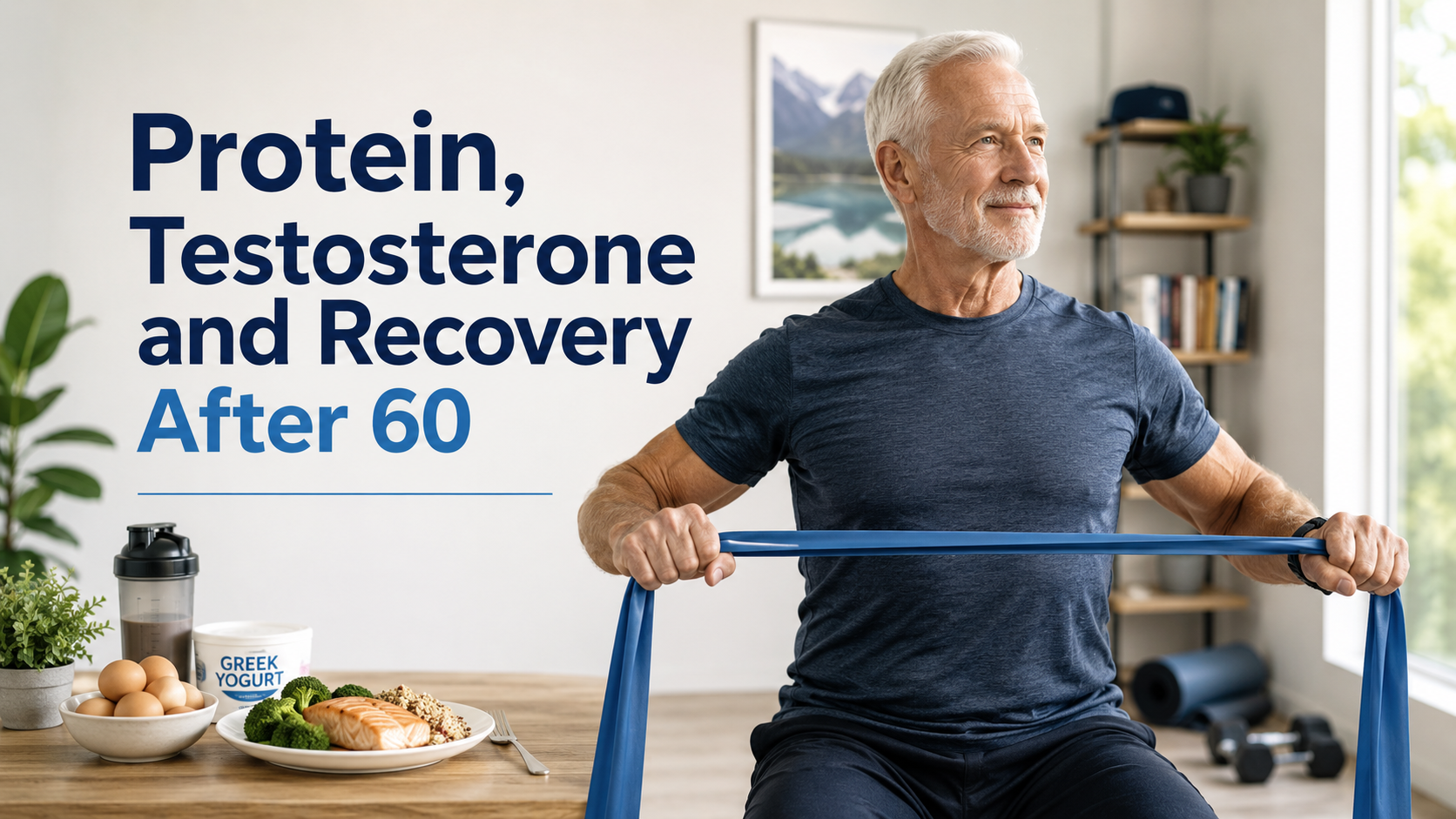
Three Things Aging Men Need to Know About Protein, Testosterone and Recovery
Aging changes the way a man’s body responds to food, exercise and rest.
These changes do not mean that weakness, weight gain or loss of independence are unavoidable. They simply mean that the habits that worked at age 40 may need to be adjusted at age 60, 70 or 80.
Research points to three important changes:
-
Older muscles may require more protein.
-
Testosterone often declines, especially when excess abdominal fat is present.
-
Recovery from strenuous exercise may take longer for some older men.
Why Do Older Men Need More Protein?
Muscle is constantly breaking down and rebuilding.
When we eat protein, the amino acids in that protein stimulate the body to repair and build muscle tissue. Resistance exercise also stimulates this rebuilding process.
As we age, our muscles may not respond as strongly to the same amount of protein. Researchers call this anabolic resistance.
It does not m...
How Seniors Can Improve and Protect Brain Health
Seniors Summary
Many seniors worry about losing their memory or mental sharpness as they age. While some changes are a normal part of aging, there is a lot you can do to protect and improve your brain health. Regular exercise, common-sense nutrition, social connections, lifelong learning, good sleep, and stress management all play important roles. The brain responds to healthy habits just as muscles respond to exercise. The choices you make every day can help support both your brain health and your independence.
How Seniors Can Improve and Protect Brain Health
When most people think about fitness, they think about muscles, walking, or losing weight.
But there is another type of fitness that becomes increasingly important as we age.
Brain fitness.
The ability to think clearly, remember information, make good decisions, and solve problems is essential for maintaining independence. In many ways, brain health is just as important as physical health.
Most seniors understand the im...
Pool Exercises for Seniors
Pool Exercises for Seniors
Why Water Workouts May Be One of the Safest Ways to Stay Independent
By Ron La Fournie
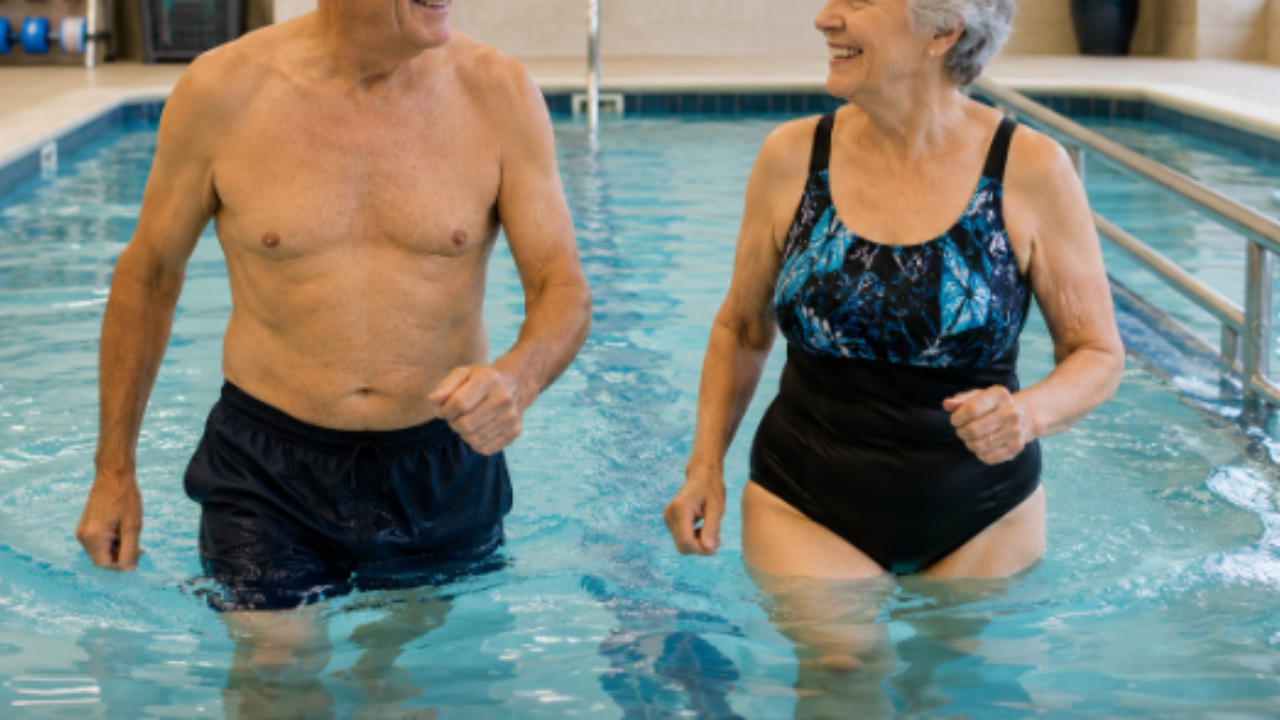
Pool exercises may be one of the safest ways for seniors to rebuild strength, improve mobility, protect sore joints, and keep moving toward independence.
Senior's Summary
Pool exercises can be one of the safest and most effective forms of fitness for seniors.
Water reduces stress on the joints while still providing resistance for strength, endurance, mobility, and balance training.
For seniors with arthritis, heart disease, joint pain, balance concerns, or reduced mobility, pool exercise offers a way to stay active with less pain and lower injury risk.
In this article, I explain why pool exercise works so well for older adults, the best exercises to start with, and why water exercise should still be combined with walking, strength, and balance training for complete longevity fitness.
Main Article
As we age, many people begin to move less.
Sometimes it is because ...
Does Muscle Know Gender?
Does Muscle Know Gender?
Seniors Summary
If you are over 60 and wondering whether men and women need completely different exercise programs, here is the simple answer: muscle responds to effort, not gender.
Men and women are biologically different. Hormones differ. Body composition differs. Starting muscle mass differs.
But when it comes to strength, balance, walking endurance, and protecting your independence, the muscle itself adapts to training in remarkably similar ways.
Load it. Challenge it. Repeat consistently.
Your muscle does not ask whether you are male or female.
It asks only one question: “Are you using me?”
Straight Talk About Muscle
Here’s what I see over and over again.
The body responds to effort.
When someone starts doing sit-to-stands, pushups against the wall, resistance band rows, or brisk walking, the body begins to change. Strength improves. Balance improves. Confidence improves.
That’s not motivational talk. That’s physiology.
Where the Stat...
The Longevity Test
What if six simple movements could tell you whether you’ll stay independent—or slowly lose it?
SENIORS SUMMARY
Most people think fitness is about looking good. It’s not. It’s about staying independent.
The Longevity Test is a simple way to measure how well your body can handle real-life movements—things like getting out of a chair, balancing, pushing, and walking.
In just a few minutes, you’ll get a score that shows where you are today—and more importantly, where you’re heading.
This isn’t about perfection. It’s about awareness… and taking action before it’s too late.
Let me tell you something most people never hear.
Fitness is not about muscles.
It’s not about weight.
It’s not even about how you look.
Fitness is about independence.
Your ability to live your life on your terms, in your own home.
To get up out of a chair without help.
To walk without fear of falling.
To carry groceries.
To get down to the floor—and get back up again.
And here’s the truth…
Most people don’t lose their inde...
Blue Zones
Blue Zones are regions of the world where people live significantly longer than average, with unusually high numbers of people living to 100 years old or more.
The term was popularized by researcher and author Dan Buettner after studying longevity patterns for National Geographic.
Researchers noticed that several places around the world had clusters of long-lived, healthy people, often with lower rates of heart disease, obesity, diabetes, and dementia.
The 5 Original Blue Zones
1. Okinawa
Often called the “Land of the Immortals.”
Key lifestyle habits:
• Plant-based diet
• Sweet potatoes as a staple
• The Hara Hachi Bu rule (eat until 80% full)
• Strong social networks
Okinawa historically had one of the highest concentrations of centenarians in the world.
2. Sardinia
This mountainous Italian island has many male centenarians, which is unusual globally.
Key habits:
• Walking steep hills daily
• Strong family connections
• Simple Mediterranean diet
• Moderate wine consumption
Sarcopenia: The Silent Muscle Loss That Steals Your Independence
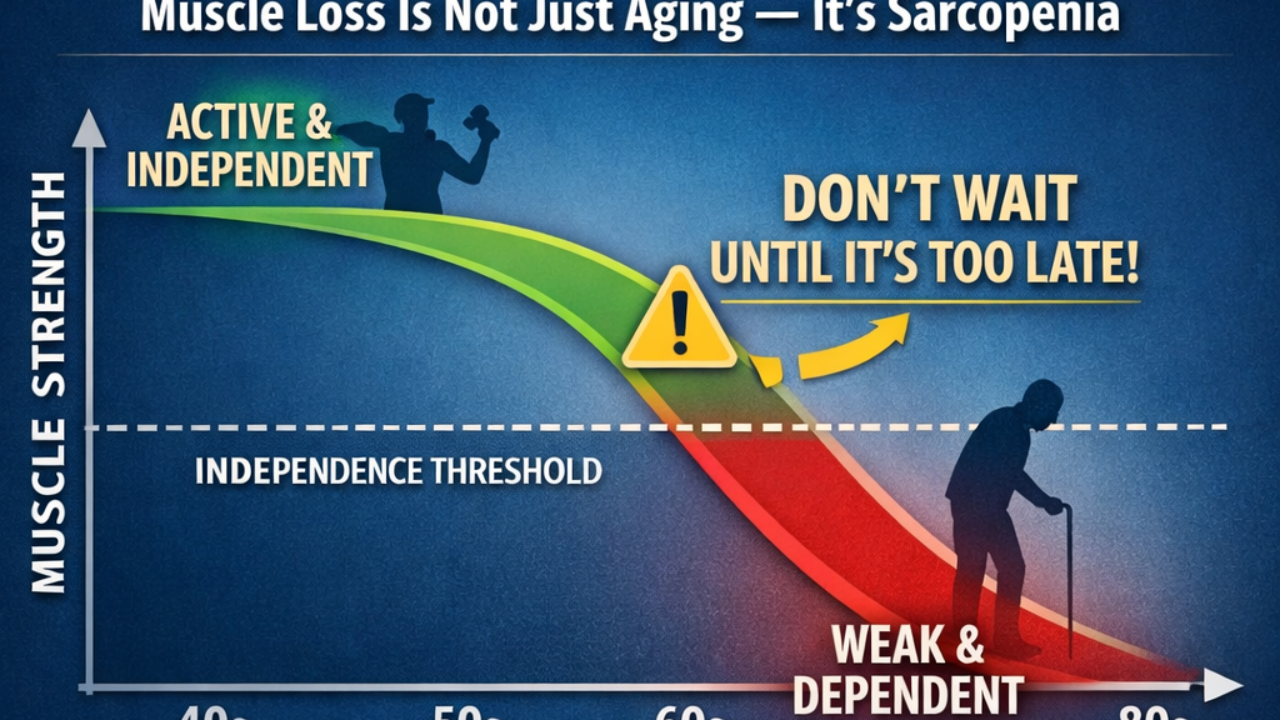
Most people think getting weaker is just part of aging—but what if it’s actually a condition you can slow, stop, or even reverse?
Seniors Summary
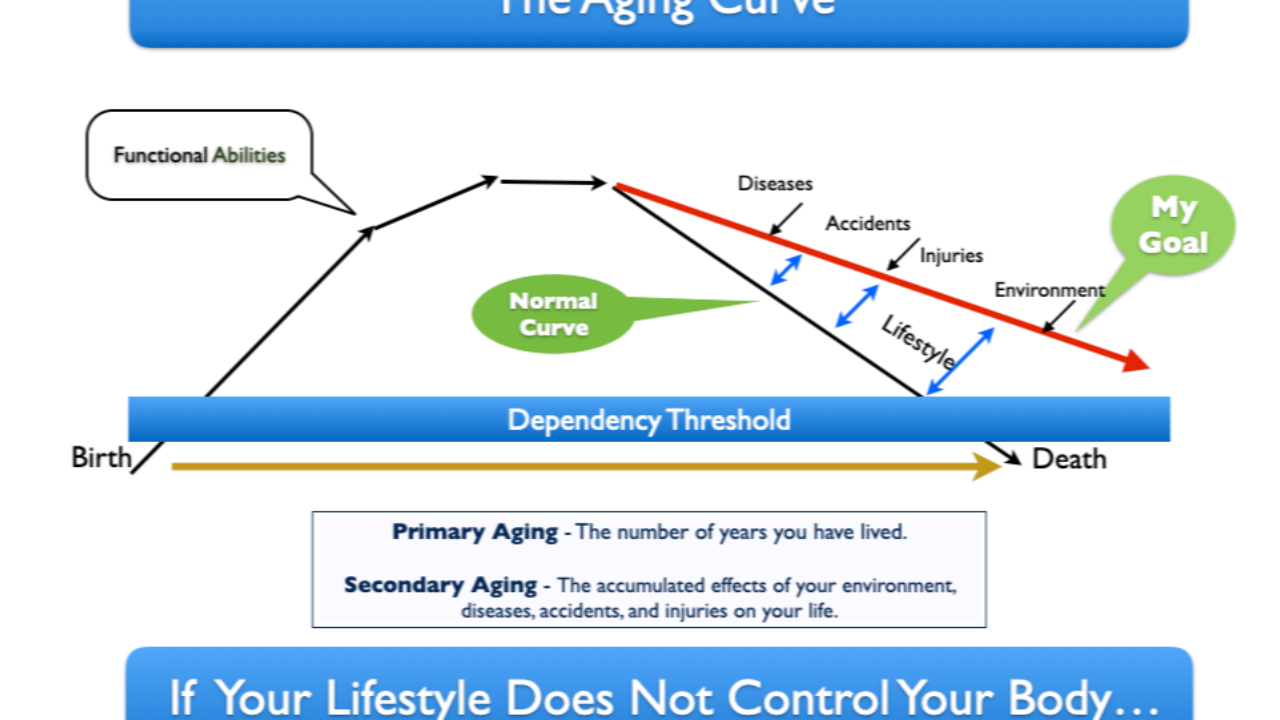
Sarcopenia means loss of muscle. It happens as we age, but it is not just “normal aging.” Without strength training and daily movement, adults can lose up to 30% of their muscle by age 80. This leads to weakness, poor balance, and loss of independence. The good news is this: simple bodyweight exercises done consistently can rebuild strength at any age.
What Is Sarcopenia?
Sarcopenia is the gradual loss of muscle mass, strength, and function as we age.
The word comes from Greek:
- “sarx” = flesh (muscle)
- “penia” = loss
It literally means “loss of muscle.”
The term was introduced by
Irwin H. Rosenberg
to describe what he saw happening in older adults.
Is It Normal—or Preventable?
Here is the truth most people never hear:
Yes, some muscle loss comes with aging.
But most of it comes from inactivity.
When you stop using your mus...
Exercise & Longevity

The 4 Longevity Skills
Evidence-Based Predictors of Longevity for Seniors
Seniors Summary (Read This First)
Research shows that how long and how well we live is strongly linked to a few basic physical abilities. These abilities are not about athletic performance — they reflect independence, resilience, and recovery.
The strongest predictors of longevity in older adults are:
• Cardiorespiratory fitness (your engine)
• Lower-body strength (your legs)
• Walking speed and mobility (your steps)
• Ability to get up and down from the floor (your get-up skill)
The good news: all four can be tested at home and improved at any age with consistent, sensible training.
What the Research Shows
Walking Speed:
Studenski et al. (2011) concluded that gait speed is a powerful predictor of survival in older adults, stating:
“Gait speed was associated with survival in all studies… survival increased across the full range of gait speeds.”
(JAMA, 2011)
Strength:
A large meta-analysis by Garcia-Hermoso et al. (20...
Are Your Genes Your Destiny?
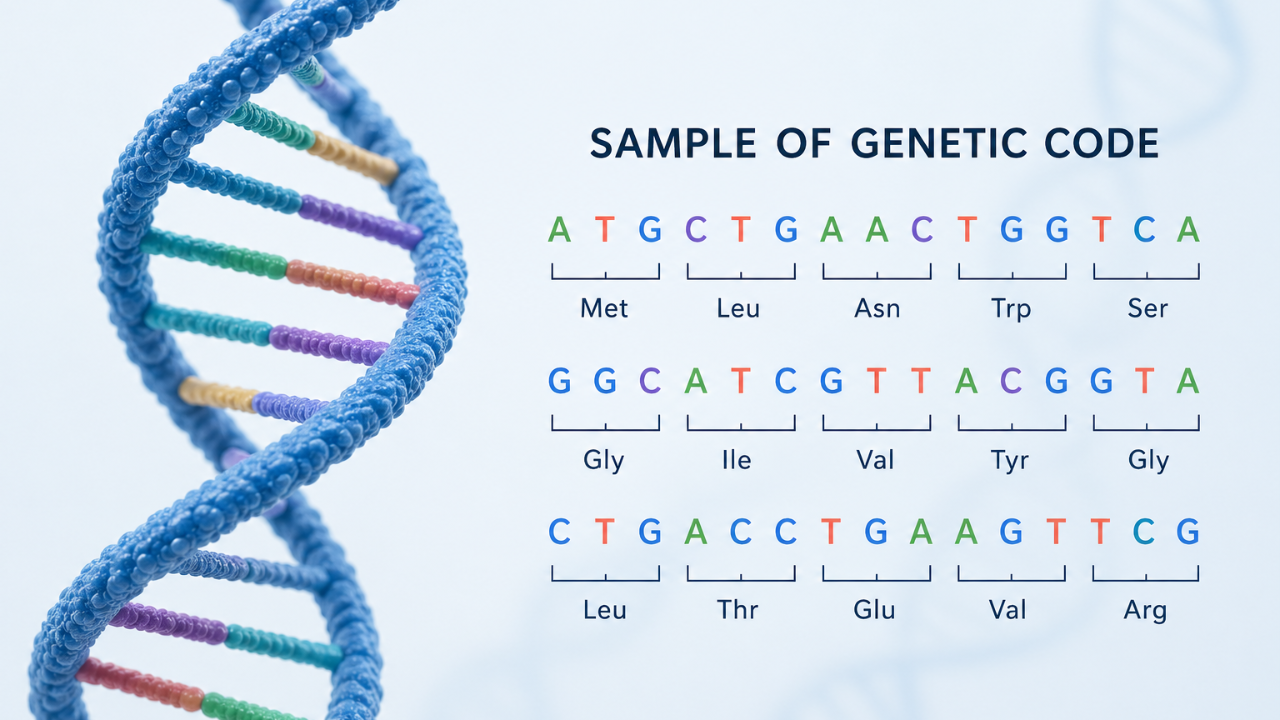
Are Your Genes Your Destiny? The Truth About Genetics and Longevity.
Many people believe their lifespan is already written in their DNA. Science shows something surprising — your daily habits matter far more than your genes.
Seniors Summary
Many seniors believe their lifespan is determined by genetics. Research shows genes usually explain only about 20–25% of how long we live. The remaining 75–80% is influenced by lifestyle habits such as physical activity, nutrition, sleep, stress management, and social connection. In other words, the way you live your life has a much bigger impact than the family you were born into.
Blog Article
How Much Do Genes Really Matter?
It is true that genetics plays a role in longevity. If many people in your family live a long time, you may have some helpful genes.
But modern research shows that genes are only a small part of the story.
Scientists who study aging have examined large populations, identical twins, and families with many people living past 1...
The One Simple Eating Habit That May Help Seniors Eat Less Without Dieting

Curiosity Hook
What if one of the most powerful nutrition habits for seniors had nothing to do with what you eat — but how fast you eat it?
Seniors Summary
Many seniors focus on what foods they should eat for better health. But research shows that how fast you eat may also matter.
Eating slowly gives your body time to send fullness signals to your brain. These signals usually take about 20 minutes. When people eat too quickly, they often eat more food than they need before their brain realizes they are full.
Simple habits such as putting your fork down between bites, chewing more, and stopping at about 80% full can help control calories naturally and improve digestion.
Why Eating Speed Matters
Your body does not instantly know when you have eaten enough.
When food enters your stomach, your digestive system begins sending signals to your brain. These signals come from hormones such as GLP-1 and peptide YY, which help tell your brain that you are satisfied.
But there is a delay....