
About Ron – The Longevity Project
At 79 years old, I still get down on the floor voluntarily.
Not because I am trying to impress anyone.
Because I understand what losing that ability can mean.
I am not observing aging from the outside — I am living inside it.
I have survived open-heart surgery, a stroke, and cancer. Those experiences changed the direction of my life and forced me to rethink everything I believed about health, exercising, nutrition, recovery, and aging itself.
For most of my younger life, I looked healthy. Like many people, I assumed that meant I was healthy.
I was wrong.
My recovery experiences created what I now call my “paradigm shift.”
I came to understand that fitness is not really about appearance, athleticism, or trying to stay young forever. As we age, fitness becomes something much more important.
It becomes about resilience.
It becomes about function.
It becomes about independence.
That realization eventually became the foundation of ‘The Longevity Project’.
Today, I continue to train daily, move with purpose, eat with intention, and adapt as my body changes. Not because I believe aging can be “beaten,” but because I believe unnecessary decline is not always inevitable.
Bodies change.
Energy changes.
Priorities change.
But strength, balance, mobility, endurance, and confidence in daily movement can often be preserved far longer than people think.
Too many older adults are taught to think only in terms of limitation and decline. My experience has shown me something different. Small, consistent habits practiced over time can dramatically affect how we move, recover, function, and live.
My approach is not built around trends, extremes, or unrealistic promises.
It is built around practical function.
Can you get up from a chair easily?
Can you maintain your balance?
Can you move confidently?
Can you recover after illness or injury?
Can you continue living independently?
Those are the questions that matter most as we age.
Through The Longevity Project, I help older adults focus on practical movement skills and sustainable habits that support everyday life. My role is not to push people beyond reason. It is to provide guidance, perspective, encouragement, and structure grounded in both lived experience and education in fitness and nutrition.
I understand that aging is not theoretical.
It is personal.
It is emotional.
It is physical.
And for many people, it can also be frightening.
That is why my philosophy is based on realism, safety, consistency, and respect for where your body is today — not where it used to be.
You define your goals.
My responsibility is to help you pursue them intentionally, safely, and with dignity.
Why Ron
Choosing a fitness program for an aging parent is not about intensity, trends, or motivation.
It is about judgment.
It is about safety.
And ultimately, it is about preserving independence.
At 79 years old, I understand aging from the inside.
I have personally experienced major health crises, recovery, setbacks, and adaptation. That perspective shapes every aspect of my approach.
The Longevity Project is not designed around pushing limits or chasing unrealistic outcomes. It is designed around helping older adults preserve the physical abilities connected to independent living.
That includes:
• Strength
• Balance
• Mobility
• Endurance
The goal is simple:
Help older adults remain capable, confident, and independent for as long as possible.
My guidance combines lived experience with formal education in fitness and nutrition. I focus on practical movement, conservative progression, awareness of limitations, and long-term consistency.
This is not medical treatment, physical therapy, or rehabilitation.
It is thoughtful, age-appropriate fitness guidance designed to support daily life without overwhelming it.
For families concerned about falls, overexertion, or unrealistic programs, my philosophy prioritizes moderation, awareness, and sustainable progress.
If your goal is to help your parent stay active with guidance from someone who genuinely understands the realities of aging, The Longevity Project offers a steady, practical, and grounded approach.
Professional Scope & Approach
The Longevity Project provides general fitness, movement, and lifestyle guidance for older adults, informed by lived experience and formal education in fitness and nutrition.
The program emphasizes:
• Strength
• Balance
• Mobility
• Endurance
That’s functional ability connected to daily living
I do not diagnose medical conditions, prescribe treatment, or replace clinical or rehabilitative care.
Participation is voluntary and self-directed. Individuals are encouraged to consult healthcare professionals regarding medical conditions, medications, surgeries, rehabilitation, or exercise limitations.
Programming principles prioritize:
• Conservative progression
• Function over performance
• Respect for individual variability
• Adaptation based on current ability, not age alone
• Long-term consistency over short-term intensity
The overall goal is to support movement confidence, independence, resilience, and informed self-management within appropriate personal and medical boundaries.
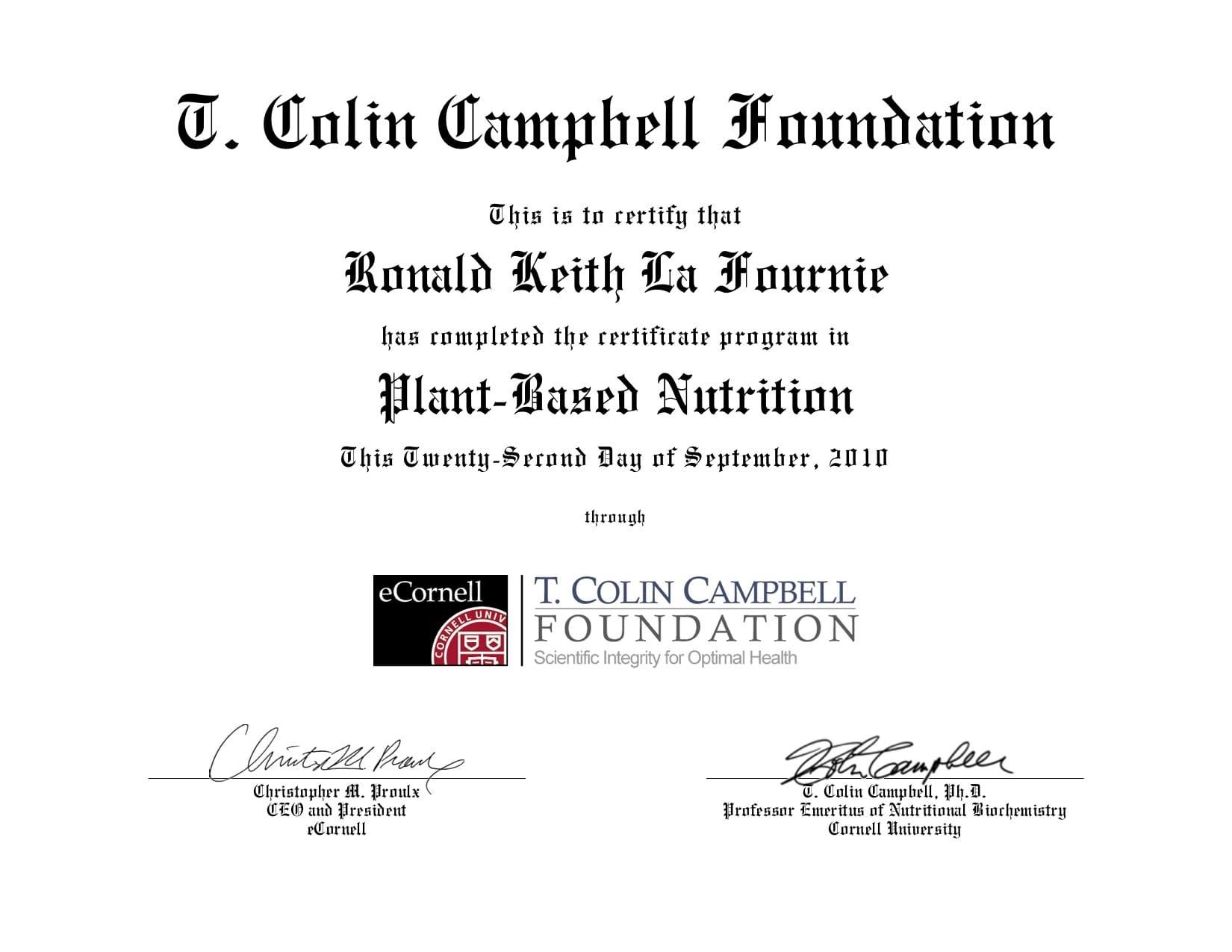
The FAI (Functional Aging Institute) provides training and certification on how to provide fitness training to mature clients.
The training provided is excellent. Combine that with a personal trainer in your age group, who understands what it's like to get older, and you really have a winning combination.
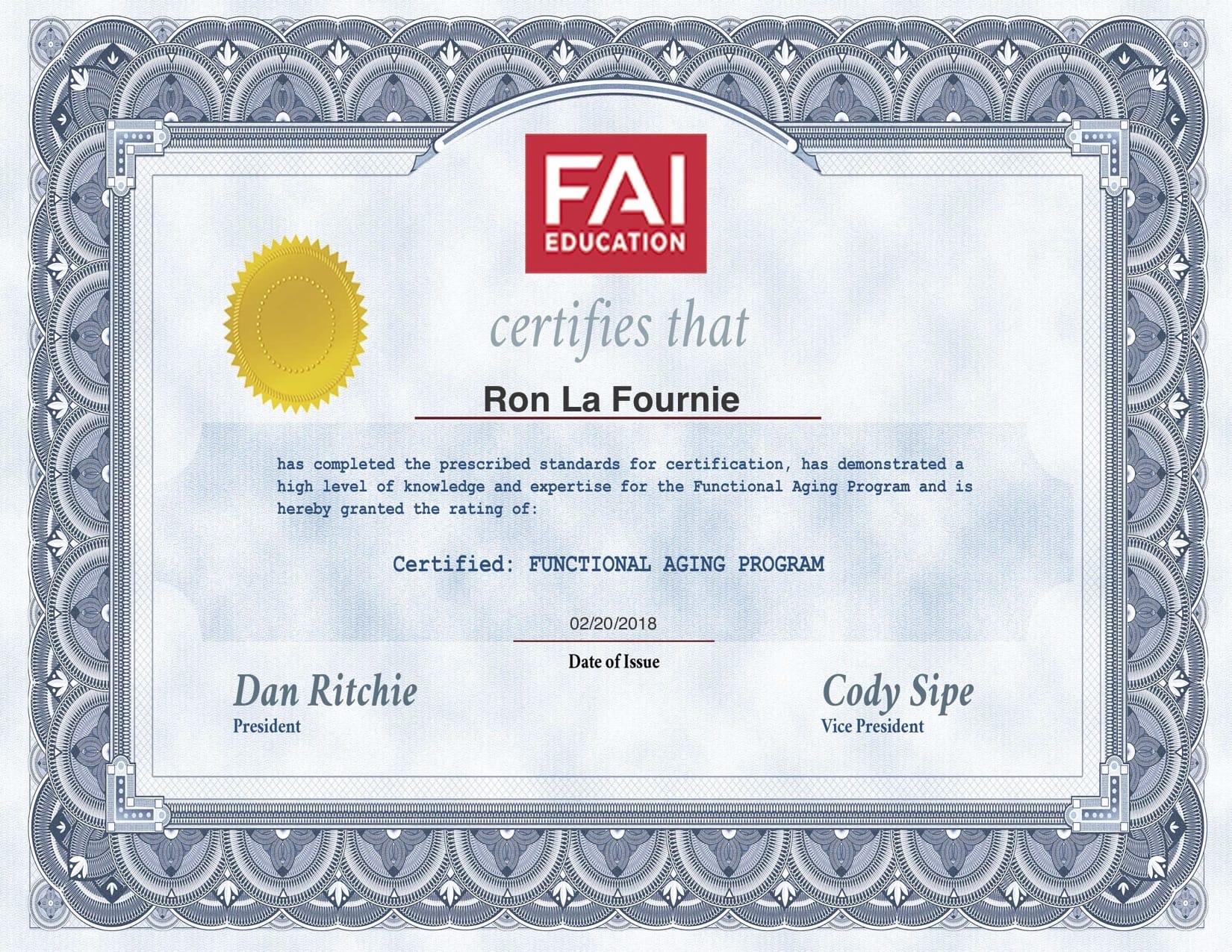
The International Sports Sciences Association
The ISSA has provided education and certification for fitness trainers, strength and conditioning coaches, nutritionists, nutrition coaches and aerobic instructors since 1988.
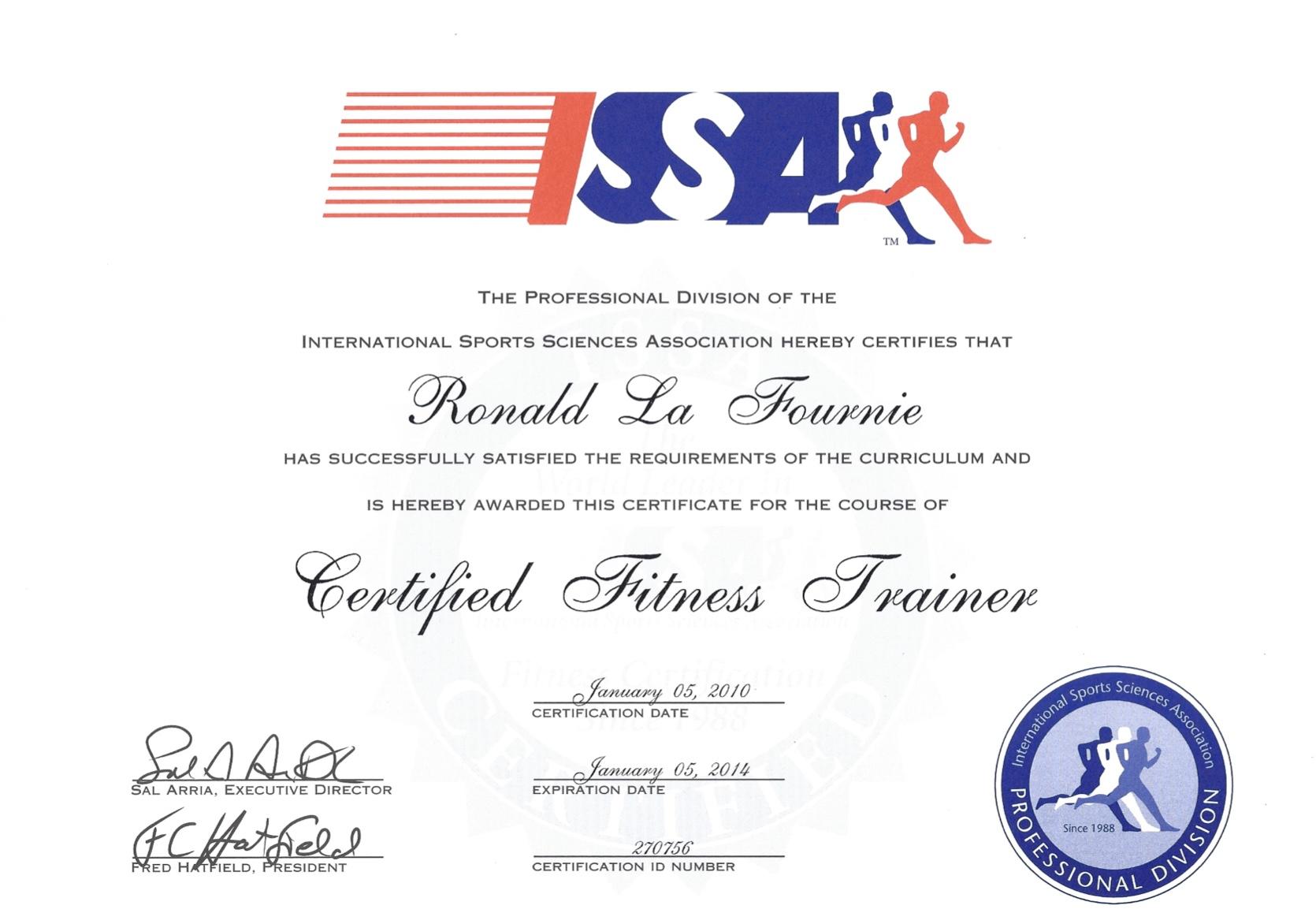
T. Colin Campbell Foundation
Thomas C. Campbell, author of 'The China Study' was educated in biochemistry. The book is an eye opener and an excellent read. Dr. Campbell studied the long-term health impacts of various nutritional approaches. His courses at Cornell University are always in demand.
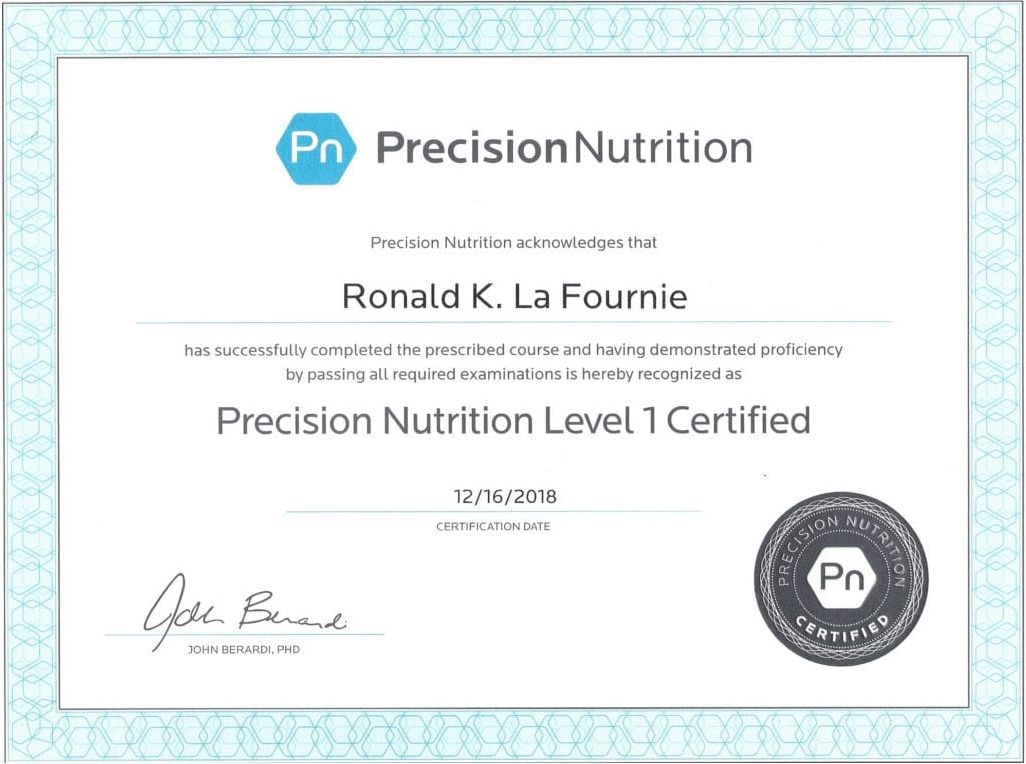
Dr. John Berardi, PhD in Exercise Physiology and Nutrient Biochemistry
One of the founders of Pn, is recognized among the top exercise nutrition experts in the world.
I liked his approach, science based, very practical, no fads, just analysis and results oriented.
His degree indicates he understands how our bodies work and what we need for fuel.
The Disclaimer
Not everything on this site will be useful for everyone. Look at it as a buffet dinner, take what you like, add what is uniquely yours, and disregard the rest.
Although we are all boomers and seniors, we all grew up in different places, had or have different family situations, different economic situations, different environments, different religious situations, different sensibilities, different living conditions, different bodies, and different technologies. The older we get, the more unique we become. No other person has your specific upbringing and experiences.
We all need to remember the essence of ‘exercise and nutrition at home’.
It is all about you.
You are the one who determines what is best for you, right or wrong! That’s the hard part, but also the best part. You get to make all the decisions.
A knowledgeable source of guidance that is not based on fads will be invaluable.
The Medium Is Not the Message
Your smart phone or personal tablet are phenomenal devices. A supercomputer that fits in your pocket. That is absolutely amazing. But it is a terrible fitness instructor or coach. It is like your personal trainer streaming your text messages and emails through their mouth while teaching you to do a blade squeeze or wall slides. Expecting to get good fitness coaching from your phone while all of your notifications are turned on is like expecting to get a nutritious meal from a coin machine.
If you do not know how to stream or ‘mirror’ from your device to your tv, look it up on Google now. Make your coach bigger. Then put your phone on ‘Do Not Disturb’ and put it away until your workout is over. I will constantly remind you to ‘Be Present’ and to ‘Workout on Purpose’. If allowed, your personal device can be a terrible distraction.
PRE AND POST WORKOUTS
Make sure that you’re able to get in a little relaxation time after your workout. Just sit or recline quietly. Reflect on the muscles you used, what you felt, and how it all makes you feel. Enjoy that moment. Think about the purpose of the workout and whether or not it was achieved, or what you may change for the next one.
