How Seniors Can Improve and Protect Brain Health
Seniors Summary
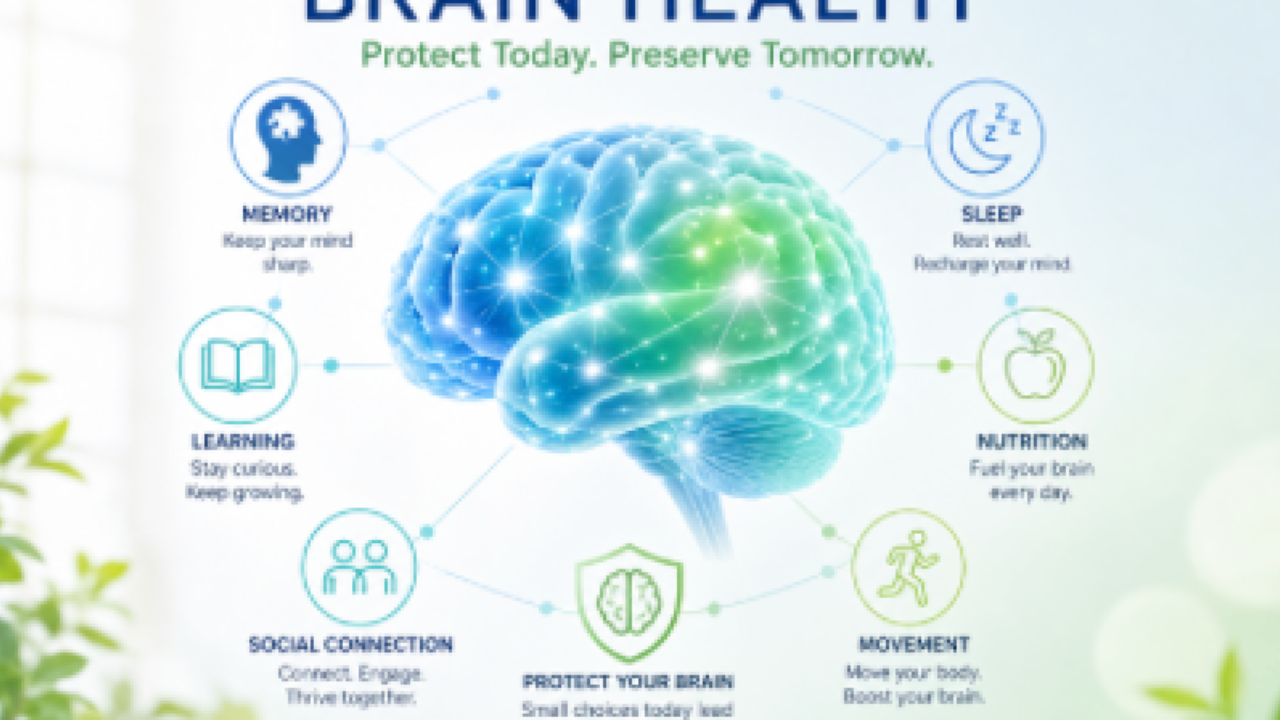
Many seniors worry about losing their memory or mental sharpness as they age. While some changes are a normal part of aging, there is a lot you can do to protect and improve your brain health. Regular exercise, common-sense nutrition, social connections, lifelong learning, good sleep, and stress management all play important roles. The brain responds to healthy habits just as muscles respond to exercise. The choices you make every day can help support both your brain health and your independence.
How Seniors Can Improve and Protect Brain Health
When most people think about fitness, they think about muscles, walking, or losing weight.
But there is another type of fitness that becomes increasingly important as we age.
Brain fitness.
The ability to think clearly, remember information, make good decisions, and solve problems is essential for maintaining independence. In many ways, brain health is just as important as physical health.
Most seniors understand the importance of exercise for their muscles and heart. Fewer realize that many of the same habits that help the body can also help the brain.
The good news is that protecting brain health does not require expensive programs, special equipment, or complicated routines. It begins with simple daily habits.
Move Your Body to Help Your Brain
If I could recommend only one thing to improve brain health, it would be regular exercise.
Exercise increases blood flow to the brain. It delivers oxygen and nutrients that support healthy brain function. Research has shown that physically active seniors often maintain better memory and thinking skills than those who are inactive.
You do not need to run marathons.
Walking, strength training, balance exercises, swimming, cycling, and other forms of regular movement can all help.
One of the reasons I believe so strongly in exercise is because fitness helped me recover from open-heart surgery, a stroke, and cancer. While I cannot prove that exercise prevented further problems, I firmly believe that being physically fit improved my ability to recover.
Movement helps both the body and the brain.
Feed Your Brain with Common-Sense Nutrition
Your brain requires quality fuel.
Just as you would not expect a car to run well on poor fuel, you cannot expect your brain to perform at its best if you constantly feed it highly processed foods.
Focus on simple habits:
- Eat more vegetables.
- Include quality protein.
- Choose healthy fats.
- Drink enough water.
- Limit excess sugar and highly processed foods.
You do not need a complicated diet plan.
Common-sense nutrition practiced consistently over time can make a meaningful difference.
Keep Learning
The brain likes challenges.
When we stop learning, we stop asking the brain to build new connections.
Reading books, learning new skills, taking classes, learning technology, playing strategy games, and developing hobbies all help keep the mind active.
The goal is not to become an expert.
The goal is to remain curious.
One of the best gifts you can give your brain is the opportunity to continue learning throughout life.
Stay Socially Connected
Social connections are often overlooked when discussing brain health.
Yet they may be one of the most important factors.
Conversations require memory, attention, listening skills, language processing, and problem solving.
Every meaningful conversation becomes a workout for the brain.
This is why family gatherings, coffee with friends, volunteering, community groups, church activities, and social clubs can all contribute to brain health.
Many seniors become more isolated as they age.
Unfortunately, isolation can negatively affect both physical and mental health.
Staying connected helps keep the mind engaged and active.
Prioritize Sleep
Sleep is one of the most powerful recovery tools available.
During sleep, the brain processes information, stores memories, and performs important maintenance functions.
Poor sleep can affect concentration, memory, mood, and decision making.
Whenever possible, establish a regular sleep schedule and create habits that support quality sleep.
Your brain works hard all day.
Give it the recovery time it deserves.
Manage Stress
Chronic stress affects both the body and the brain.
High stress levels can interfere with concentration, memory, and clear thinking.
The goal is not to eliminate stress completely. That would be impossible.
Instead, focus on healthy ways to manage it.
Walking, prayer, meditation, reading, hobbies, gardening, spending time in nature, and connecting with friends can all help reduce stress.
Small daily habits often provide the greatest long-term benefits.
Small Daily Habits Create Long-Term Results
One of the biggest lessons I have learned is that major results usually come from small actions repeated consistently.
The same principle applies to brain health.
You do not need to change everything today.
Start with one or two habits.
Take a daily walk.
Read for fifteen minutes.
Call a friend.
Eat one extra serving of vegetables.
Go to bed a little earlier.
These small improvements may seem insignificant on any given day, but over months and years they can have a powerful impact.
Final Thoughts
Brain health is not determined by age alone.
It is influenced by the choices and habits we practice every day.
Exercise, common-sense nutrition, lifelong learning, social connections, quality sleep, and stress management all work together to support a healthy brain.
Your goal is not perfection.
Your goal is progress.
Protecting your brain is really about protecting your independence.
And independence is worth protecting.
Practical Application
This Week's Brain Health Challenge:
- Walk for at least 20 minutes every day.
- Read or learn something new for 15 minutes daily.
- Reach out to one friend or family member.
- Aim for 7–8 hours of sleep each night.
- Add one extra serving of vegetables to your daily meals.
Small steps practiced consistently can produce remarkable results over time.
Scientific References
- Erickson KI et al. (2011). Exercise Training Increases Size of Hippocampus and Improves Memory. Proceedings of the National Academy of Sciences.
- Livingston G et al. (2024). Dementia Prevention, Intervention, and Care: 2024 Report of the Lancet Commission. The Lancet.